
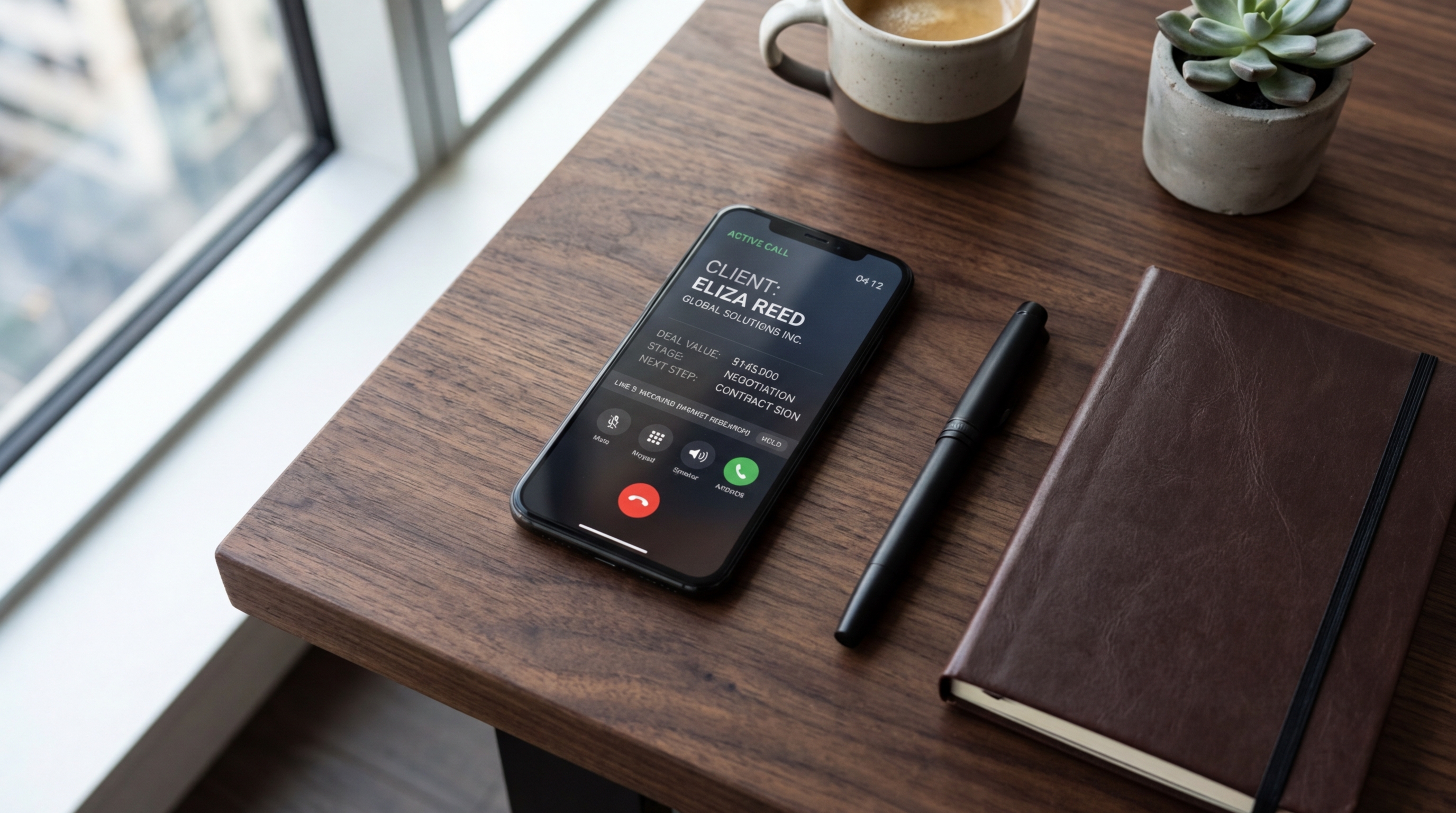
Imagine you are an independent contractor who just secured a discovery call with a high-ticket client. You step out of your home office, transitioning your smartphone connection from your local Wi-Fi router to a cellular 5G network. Suddenly, the audio cuts out. The free calling app you downloaded last week failed to handle the network handoff, and the call drops completely. You scramble to reconnect, but the damage to your professional reputation is already done.
I hear variations of this exact story almost every week. Over my ten years engineering telecommunications solutions, I have watched users repeatedly fall into the same trap. They assume all virtual numbers are built on the same underlying technology, leading them to trust critical client interactions to unstable, ad-supported platforms.
The industry has fundamentally shifted. The era of the disposable, low-quality burner line is ending. Today, a 2nd phone number is no longer just a temporary shield for your privacy; it is a necessary piece of professional infrastructure. Here is a look at why the underlying technology of your communication tools matters more in 2026 than ever before, and how you can select a system that actually supports your daily workflow.
Acknowledge the Shift From Disposable Lines to Real Infrastructure
For a long time, the market was flooded with applications offering quick, temporary digits. People would search for a 'text free' or 'text now' solution simply to bypass an online verification screen or to list an item on a local marketplace. The expectations were incredibly low. If the call quality was poor or the message arrived ten minutes late, users accepted it as the cost of using a free text app.

That tolerance for poor performance has evaporated. According to the Adjust "Mobile App Trends 2026" report, global mobile consumer spend increased by 10.6% in 2025, reaching a massive $167 billion. Application sessions also saw a solid 7% year-over-year increase. What does this data tell us? It proves that users are actively investing their time and money into high-quality mobile experiences. They are abandoning bare-bones utilities in favor of sophisticated, reliable tools.
I have observed that professionals—ranging from freelance designers to small business owners—now expect their mobile communication tools to rival enterprise desktop systems. They no longer want to juggle a basic Zangi Messenger account for one client and a separate TextPlus account for another. They want unified, stable VoIP providers that handle voice, text, and voicemail without dropping packets or missing notifications.
Demand AI-Driven Reliability Over Single-Channel Flaws
The core argument I present to anyone comparing communication tools is simple: the backend architecture dictates your front-end experience. The Adjust 2026 report explicitly highlights that mobile growth is now driven by "AI + multi-platform measurement architecture" rather than single-channel campaign optimization. In the telecom sector, this transition to AI is exactly what separates a modern VoIP phone service from a legacy application.
Older SIP (Session Initiation Protocol) applications route your calls through a single, static server pathway. If that server experiences heavy load, your call quality degrades. Modern platforms utilize AI-driven dynamic routing. These systems constantly analyze network latency and packet loss in real time, automatically shifting your voice traffic to the most stable pathway available. This means that when you walk out of your office and switch from Wi-Fi to cellular data, the system anticipates the transition and maintains the connection.
Some might argue that heavy desk setups like an Ooma phone are still necessary for this level of stability. While physical hardware has its place in large corporate offices, a modern VoIP phone system housed entirely within your mobile device now offers comparable reliability, provided you choose an application built on updated architecture.
Prioritize Privacy as Tracking Opt-Ins Evolve
The conversation around virtual numbers always intersects with privacy. The Adjust report provides a fascinating data point here: iOS App Tracking Transparency (ATT) opt-in rates steadily rose from 35% in Q1 2025 to 38% in Q1 2026. Consumers are becoming far more deliberate and educated about who receives access to their personal data. They are actively managing their digital presence.
This mindset directly applies to how we handle our personal carrier numbers. Handing out your primary mobile number to every new client, delivery driver, or web form is the equivalent of giving away your digital identity. A true 2nd phone number acts as a firewall. However, if you use a poorly constructed free text app that monetizes your data by selling your usage patterns to third-party brokers, you defeat the entire purpose of that firewall.

My colleague Naz Ertürk previously broke down the nuances of app selection in her comprehensive guide analyzing how to choose the right second phone number when looking at Zangi, free text apps, and Boss Revolution. As she correctly pointed out, selecting a tool based solely on price often costs you your privacy in the long run. You must choose a platform that respects your data and provides a clean separation between your personal and public communications.
Evaluate Your Real Needs for a Second Line
Who actually needs to step up to a premium VoIP service? In my engineering practice, I segment users into clear profiles to help them avoid overspending or under-equipping themselves.
This approach is for:
- Independent contractors who need to maintain a professional image across different area codes.
- Small teams looking for the best VoIP for small business operations without the overhead of physical desk phones.
- Frequent travelers who utilize eSIMs like Airalo for data but still need to maintain a persistent US or local number for calls and SMS.
This approach is NOT for:
- Individuals seeking untraceable lines for spam or malicious activity. Modern compliant telecom providers actively block and filter this behavior.
- Users who only need to receive a single, one-time SMS verification code. For that extremely limited use case, a temporary tool might suffice.
If your daily workflow relies on answering client calls promptly, catching every voicemail, and maintaining a localized presence, you need a dedicated architecture. I explored the specific advantages of localization in a previous article detailing why a 213 area code feature matters more than most textfree users expect, highlighting how regional familiarity builds instant trust with callers.
Choose the Right Communication Tool Intentionally
When you sit down to compare alternatives like Google Voice, Line, Talkatone, Text Me, and TextNow, stop looking exclusively at the interface. Look at the stability. Look at how the application handles incoming media, spam filtering, and network transitions.
We see this push for higher quality across the entire mobile software ecosystem. At Dynapps LTD, our development philosophy across all our mobile utilities centers on this exact shift: users are exhausted by unreliable, ad-heavy experiences and are actively seeking polished, professional tools.
If you want consistent call quality, strict privacy boundaries, and intelligent network routing without being tied to an enterprise contract, Second Phone Number DoCall 2nd's dedicated VoIP infrastructure is designed for that exact purpose. It bridges the gap between the heavy desk phone and the fragile free text app, giving you a reliable communication channel right in your pocket. Treat your communication setup as an investment in your professional reputation, because your clients will absolutely notice the difference.